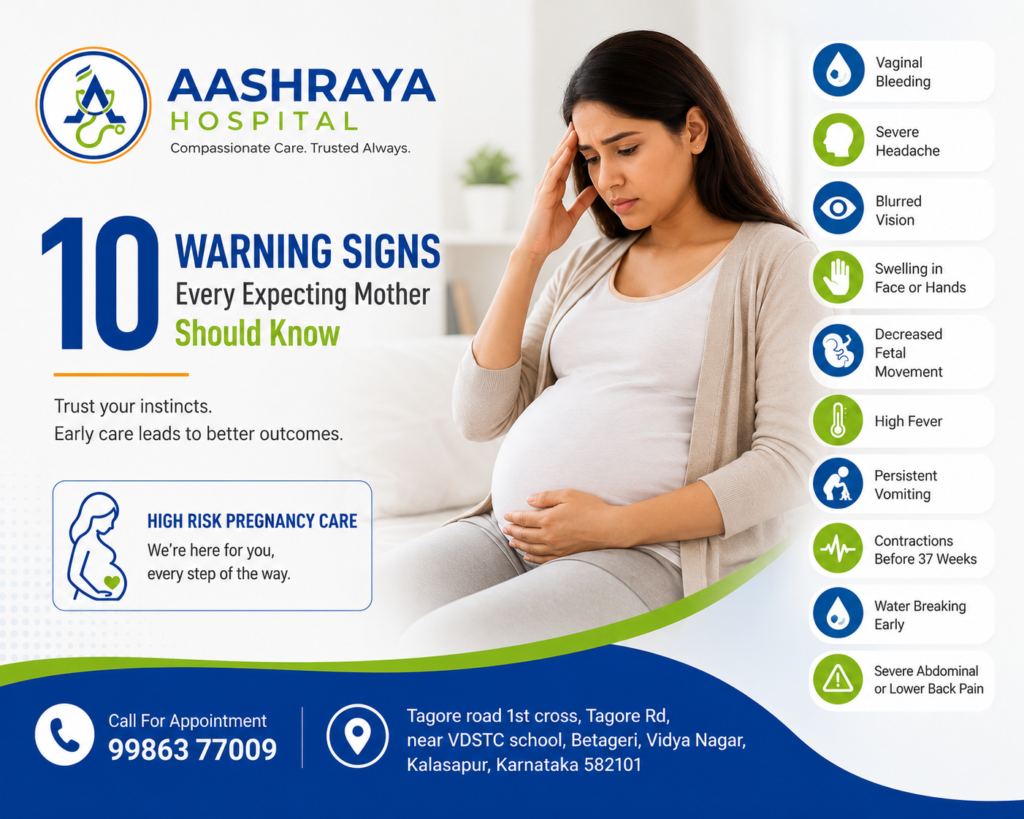
Trust your instincts. If something feels off in your pregnancy, it usually is. Most high risk pregnancy symptoms are manageable when caught early. Below are the 10 warning signs to watch for, and what to do if you notice one.
What Are High Risk Pregnancy Symptoms?
High risk pregnancy symptoms are physical warning signs that suggest a pregnancy needs closer medical attention. They can appear at any stage. Some are subtle. Others are urgent. Either way, they exist to tell you: get checked, don’t wait.
A pregnancy becomes “high-risk” for many reasons. Age is one factor. So is an existing health condition. Sometimes it develops suddenly, with no history at all. In fact, most high-risk pregnancies still end in healthy deliveries, especially when high risk pregnancy symptoms are caught early.
Common Risk Factors to Know
Several things can raise the chances of a high-risk pregnancy. For example, being under 17 or over 35 increases risk. So does high blood pressure or diabetes before pregnancy. Carrying twins matters too. Additionally, a history of pregnancy loss or preterm birth plays a role, as does obesity or thyroid disease. However, having a risk factor doesn’t mean something will go wrong. It simply means your doctor will watch more closely.
The 10 High Risk Pregnancy Symptoms to Watch For
Symptoms in Early to Mid-Pregnancy
1. Vaginal bleeding. Any bleeding beyond light spotting needs same-day attention, especially with cramping. It can range from minor to serious, so don’t guess. Call your doctor.
2. Severe or persistent headaches. A headache that won’t ease with rest or paracetamol is worth flagging. In the second half of pregnancy, it can signal preeclampsia.
3. Blurred vision or seeing spots. Vision changes paired with a headache or swelling are a preeclampsia red flag. Don’t brush this off as simple tiredness.
4. Sudden swelling in the face or hands. Some foot swelling is normal. However, sudden swelling in your face or hands is not. It’s worth getting checked quickly.
5. Severe abdominal or lower back pain. Cramping that comes in waves, or pain that’s sharp and constant, points to several possible complications. Get it evaluated promptly.
Symptoms in Late Pregnancy
6. Decreased fetal movement. If your baby moves noticeably less, especially after 28 weeks, don’t wait it out. Get checked the same day.
7. High fever. A temperature above 100.4°F (38°C) that doesn’t respond to basic care can signal infection. This needs quick treatment during pregnancy.
8. Persistent vomiting. Some nausea is normal early on. However, vomiting that keeps you from keeping food or water down, especially later in pregnancy, needs medical support.
9. Contractions before 37 weeks. Regular, timed contractions before your due date can signal preterm labor. The earlier it’s caught, the more options you have.
10. Your water breaking early. If fluid leaks before labor starts, call your doctor right away. This applies even if you’re not having contractions yet.
When to See a High Risk Pregnancy Doctor Near You
If you notice any of the symptoms above, don’t wait for your next scheduled visit. Are you searching for a high risk pregnancy doctor near me? Expecting mothers in Gadag-Betageri can reach a high risk pregnancy specialist Gadag-Betageri locally, including care from the best gynecologist in Gadag-Betageri. Early evaluation makes the biggest difference in outcomes. Explore high-risk pregnancy care
Frequently Asked Questions About High Risk Pregnancy Symptoms
1.How do I know if my pregnancy is high-risk? Your doctor flags this using several factors. These include your age, medical history, and findings during checkups. If you’re unsure, simply ask at your next visit.
2.What are the early signs of a high-risk pregnancy? Early signs are often subtle. Unusual fatigue, spotting, or mild swelling are common examples. As pregnancy progresses, symptoms tend to become more specific.
3.Is every high-risk pregnancy dangerous? No. “High-risk” means extra monitoring is needed. It doesn’t mean complications are guaranteed. Many high-risk pregnancies end in perfectly healthy deliveries.
4.Can a high-risk pregnancy become normal again? Sometimes, yes. Certain risk factors, like well-managed gestational diabetes, can stabilize. As a result, your care team may adjust your monitoring over time.
5.How often will I need checkups if my pregnancy is high-risk? It varies by condition. Many high-risk pregnancies require visits every 1–2 weeks in the third trimester. This allows your doctor to catch changes early.
6.Should I go to the ER or call my doctor first? For anything sudden or severe, go straight to the ER. This includes heavy bleeding or severe headache with vision changes. For milder concerns, call your doctor the same day instead.
7.Does a high-risk pregnancy mean I’ll need a C-section? Not necessarily. Many high-risk pregnancies still end in a normal vaginal delivery. The label affects monitoring, not automatically how you deliver.
8.Can stress make a high-risk pregnancy worse? Ongoing high stress isn’t ideal for any pregnancy. However, occasional worry isn’t something to feel guilty about. Focus instead on attending appointments and flagging symptoms.
9.Is it safe to travel during a high-risk pregnancy? This depends entirely on your specific condition. Therefore, ask your doctor directly rather than assuming either way.
10.What should I bring to my high-risk pregnancy appointments? Bring a list of new or ongoing symptoms. Also bring your current medications and any written questions. It’s easy to forget these details when you’re anxious.
Conclusion: Trust the High Risk Pregnancy Symptoms Your Body Shows You
A high-risk pregnancy label can feel frightening at first. In practice, though, it mostly means one thing: someone is paying closer attention to you and your baby. Most high risk pregnancy symptoms are simply your body’s way of asking for that attention sooner.
You don’t need to diagnose yourself. You don’t need to be “sure” something is wrong first. That’s what your care team is for. Being high-risk is common, not rare. Many pregnancies fall into this category for ordinary reasons, like age or family history. Still, the vast majority end with healthy mothers and healthy babies.
If any of these symptoms show up, call the same day. It’s never an overreaction. And if you’re in Gadag-Betageri without a high-risk pregnancy specialist yet, now is a good time to find one. Not for an emergency, but so you already have someone to call the moment you need them.