
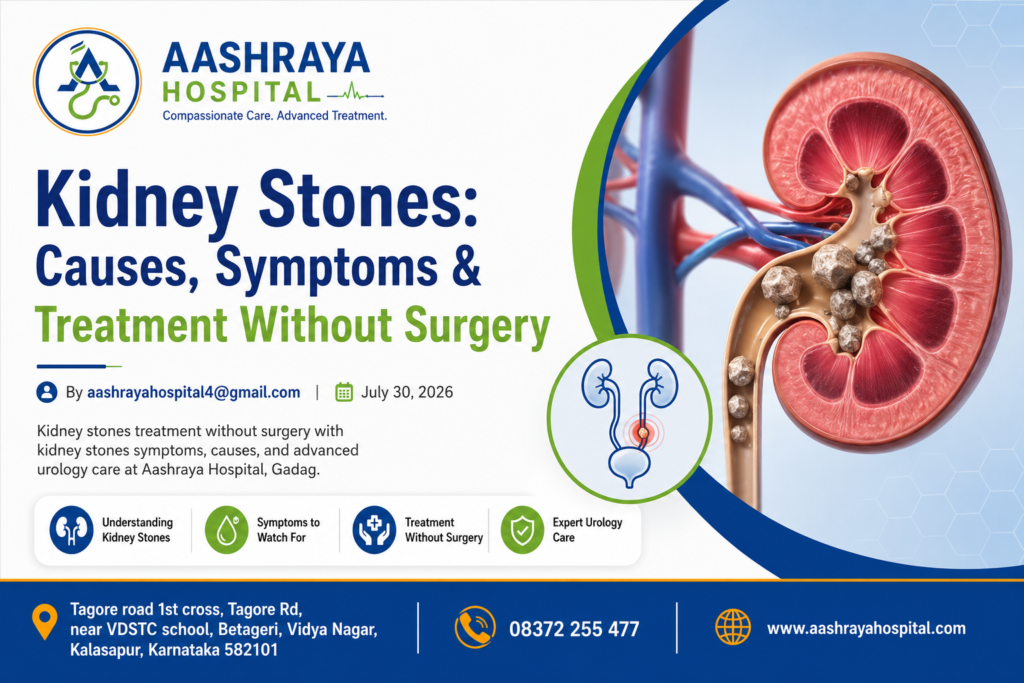
Sudden back pain that comes in waves is scary, and it’s often the first sign of a kidney stone. The good news is that most stones don’t need surgery at all. Here’s kidney stones treatment without surgery, along with the causes and symptoms that lead patients to seek it.
What Causes Kidney Stones?
Kidney stones form when minerals and salts crystallize inside the kidney. This usually happens when urine becomes too concentrated. As a result, substances like calcium, oxalate, or uric acid stick together instead of flushing out.
Several everyday factors raise the risk. For example, not drinking enough water is the single biggest cause. Additionally, a diet high in salt or animal protein contributes. Family history plays a role too, as does obesity. Certain medical conditions, such as gout or hyperparathyroidism, can also increase risk. However, in many cases, dehydration alone is enough to trigger a stone.
Who Is Most at Risk?
Men develop kidney stones more often than women. Furthermore, people who’ve had one stone are likely to get another. Hot climates increase risk as well, since sweating concentrates urine faster. Therefore, staying hydrated matters even more during Gadag’s warmer months.
Kidney Stones Symptoms to Watch For
Kidney stones symptoms often appear suddenly, without warning. The most common signs include:
1. Sharp pain in the back or side. This pain typically comes in waves and can radiate toward the lower abdomen or groin.
2. Pain during urination. A burning sensation often means the stone has moved closer to the bladder.
3. Blood in the urine. Urine may look pink, red, or brown. This happens as the stone irritates the urinary tract.
4. Nausea or vomiting. The intensity of stone pain can trigger a strong nausea response in many patients.
5. Cloudy or foul-smelling urine. This can signal an infection alongside the stone, which needs prompt treatment.
6. Frequent urge to urinate. You may feel like you need to go constantly, even in small amounts.
7. Fever with chills. This combination, alongside stone symptoms, is an emergency. It usually means infection has set in.
If you notice fever alongside any of the above, don’t wait. Go to the ER immediately, since an infected stone can become dangerous quickly.
Kidney Stones Treatment Without Surgery
Most small stones pass on their own, and doctors typically try non-surgical options first. Here’s what that usually involves.
Watchful Waiting and Hydration
For stones under 5mm, doctors often recommend simply drinking more water. This helps flush the stone out naturally. Pain relief medication manages discomfort during this time. Most stones this size pass within a few weeks.
Medication-Assisted Passage
For slightly larger stones, doctors may prescribe alpha-blockers. These relax the muscles in the ureter, making it easier for the stone to pass. Combined with hydration, this approach avoids surgery in many cases.
Shockwave Lithotripsy (ESWL)
This is a non-invasive procedure that uses sound waves to break the stone into smaller pieces. As a result, the fragments pass more easily through urine. It’s done without any incision, and most patients go home the same day.
kidney stones treatment without surgery.Surgery is generally reserved for stones that are too large to pass, cause severe blockage, or lead to repeated infections. Even then, many modern procedures are minimally invasive rather than traditional open surgery.
When to See a Doctor Near You
kidney stones treatment without surgery.If you’re experiencing sudden back or side pain, don’t try to wait it out at home. A same-day evaluation can determine the stone’s size and the right treatment path. Gadag-Betageri patients can reach kidney stone specialists in Gadag-Betageri, including care from the best urologist in Gadag-Betageri, for fast, accurate diagnosis. Explore kidney stone care
Frequently Asked Questions About Kidney Stones
1. Can kidney stones go away without surgery? Yes, most kidney stones under 5mm pass on their own with enough water and time. Larger stones may still need a non-surgical procedure like shockwave therapy before surgery is even considered.
2. How long does it take to pass a kidney stone? It varies by size. Smaller stones often pass within one to three weeks. Larger stones can take longer and may need medical assistance to move along.
3. What foods should I avoid with kidney stones? Limit salty foods, animal protein, and foods high in oxalate, such as spinach and nuts. However, don’t cut calcium entirely, since low calcium can actually increase stone risk.
4. Is kidney stone pain worse than childbirth? Many patients describe kidney stone pain as one of the most intense pains they’ve experienced. That said, pain tolerance varies widely from person to person.
5. Can drinking water alone prevent kidney stones? Staying well-hydrated is the single most effective prevention step. Aim for enough water that your urine stays light yellow throughout the day.
6. Do kidney stones come back after treatment? Yes, they can. Roughly half of patients develop another stone within ten years, which is why follow-up care and hydration habits matter long-term.
7. When is kidney stone pain a medical emergency? Pain combined with fever, chills, or an inability to urinate needs emergency care immediately. This combination often means infection or blockage.
8. Can I dissolve a kidney stone with home remedies? Some home remedies claim to dissolve stones, but there’s no strong medical evidence behind most of them. Speak with your doctor before relying on any remedy alone.
Conclusion: Kidney Stones Treatment Without Surgery Is Often Possible
Kidney stones are painful, but surgery isn’t always the answer. In fact, most stones pass with hydration, medication, or a simple non-invasive procedure. The key is catching symptoms early and getting the right evaluation quickly.
If you’re dealing with sudden back pain or any of the symptoms above, don’t wait for it to get worse. A quick visit can confirm whether kidney stones treatment without surgery is the right path for you, or whether something more is needed.