

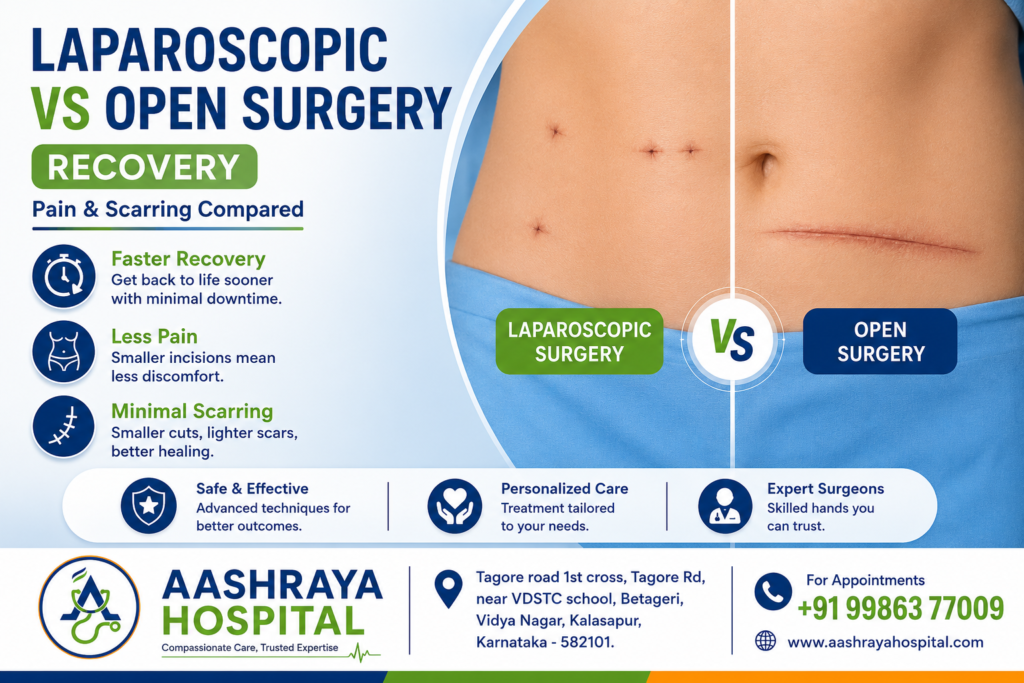
Choosing between laparoscopic and open surgery can feel overwhelming when you’re already anxious about the procedure itself. In short, laparoscopic vs open surgery recovery differs mainly because of incision size — laparoscopic surgery uses small keyhole cuts, while open surgery requires one larger incision. That difference shapes almost everything about your healing journey, including pain levels and scarring. This guide breaks down what to actually expect from each approach, so you can ask your surgeon the right questions.
What’s the Difference in Laparoscopic vs Open Surgery Recovery?
The core difference comes down to incision size. Laparoscopic surgery, also called minimally invasive surgery, uses a thin camera (laparoscope) and small instruments inserted through a few tiny incisions, usually 0.5–1.5 cm each. Open surgery, on the other hand, uses one larger incision that gives the surgeon direct access and a wider view of the area.
When Each Approach Is Used
- Laparoscopic surgery: Gallbladder removal, appendectomy, hernia repair, many gynecological procedures
- Open surgery: Complex cases, large tumors, extensive scar tissue, or emergencies needing rapid, wide access
Since every patient’s anatomy and condition differ, your surgeon will recommend the approach that’s safest for your specific case — not simply the newer or trendier option.
Laparoscopic vs Open Surgery Recovery Time
Recovery speed is often the first thing patients ask about, and the difference here is significant.
Laparoscopic Surgery Recovery
Most patients go home the same day or after one night in the hospital. Walking is usually encouraged within hours. As a result, many people return to light daily activities within a week and to work within 1–2 weeks.
Open Surgery Recovery
Open surgery typically requires a hospital stay of 3–7 days. Because the incision is larger, tissue takes longer to heal. Therefore, most patients need 4–6 weeks before returning to normal activity, and longer for physically demanding jobs.
Laparoscopic vs Open Surgery Recovery: Pain Levels
Pain after any surgery is expected, but the intensity and duration usually differ between the two methods.
Laparoscopic Surgery Pain
Pain is generally milder since muscles aren’t cut open. However, some patients feel temporary shoulder pain from the gas used to inflate the abdomen during the procedure — this typically resolves within a day or two.
Open Surgery Pain
Pain tends to be more intense initially, since a larger incision cuts through muscle and tissue. For example, coughing, laughing, or sudden movements can be uncomfortable for the first week or two, and pain medication is often needed longer.
Laparoscopic vs Open Surgery Recovery: Scarring Differences
Laparoscopic Scars
Scars are small, usually just a few centimeters, and fade significantly within months. Most patients end up with barely noticeable marks after a year.
Open Surgery Scars
Scars are longer and more visible, since the incision itself is larger. Similarly, healing takes longer, and scars may remain more prominent, especially in people prone to keloid formation.
Which Approach Is Right for You? (Laparoscopic vs Open Surgery Recovery)
This decision isn’t only about pain or scarring — safety always comes first. Some conditions genuinely require open surgery for the surgeon to work safely and thoroughly. Meanwhile, many routine procedures are now done laparoscopically as the safer, faster-recovery default. Weighing laparoscopic vs open surgery recovery with your surgeon ensures the choice fits your specific case, not just general trends.
Our surgical team at Aashraya Hospital in Gadag-Betageri evaluates each case individually, weighing your specific diagnosis, anatomy, and overall health before recommending an approach.
When to Contact Your Surgeon After Either Procedure
Regardless of which surgery you have, watch for these warning signs during recovery:
- Fever above 101°F
- Increasing redness, swelling, or discharge at the incision site
- Severe or worsening pain not controlled by prescribed medication
- Nausea, vomiting, or inability to keep fluids down
If you notice any of these, contact Aashraya Hospital’s surgical team in Gadag-Betageri promptly rather than waiting for your next follow-up.
Frequently Asked Questions
1. What is the main difference in laparoscopic vs open surgery recovery? Laparoscopic surgery generally means less pain, a shorter hospital stay, and smaller, fading scars. Open surgery involves more pain initially, a longer recovery period, and a larger, more visible scar, because of the bigger incision required.
2. Is laparoscopic surgery always better than open surgery? Not always. Laparoscopic surgery is often preferred for routine procedures, but some complex cases, large tumors, or emergencies still require open surgery for safety and thoroughness.
3. How long does it take to return to work after laparoscopic surgery? Most patients return to desk-based work within 1–2 weeks, though this varies by procedure and how physically demanding the job is.
4. How long does open surgery recovery usually take? Most patients need 4–6 weeks before resuming normal activities, and longer if the job involves heavy lifting or physical strain.
5. Does laparoscopic surgery leave any visible scars? Yes, but they’re typically small, just a few centimeters each, and fade significantly within several months to a year.
6. Why do some patients feel shoulder pain after laparoscopic surgery? This happens because carbon dioxide gas used to inflate the abdomen during the procedure can irritate the diaphragm, causing referred pain in the shoulder. It usually resolves within a day or two.
7. Is laparoscopic surgery safe for everyone? Most patients are good candidates, but certain conditions, like extensive scar tissue from previous surgeries or specific anatomical concerns, may make open surgery the safer choice.
8. How can I reduce scarring after either type of surgery? Keeping the incision clean and dry, avoiding sun exposure on the healing scar, and following your surgeon’s wound-care instructions closely all support better outcomes for laparoscopic vs open surgery recovery.
Final Thoughts on Laparoscopic vs Open Surgery Recovery
Both approaches aim for the same outcome — a safe, successful procedure. Understanding laparoscopic vs open surgery recovery in advance helps you know what to expect and ask better questions before your surgery date.book appointment