

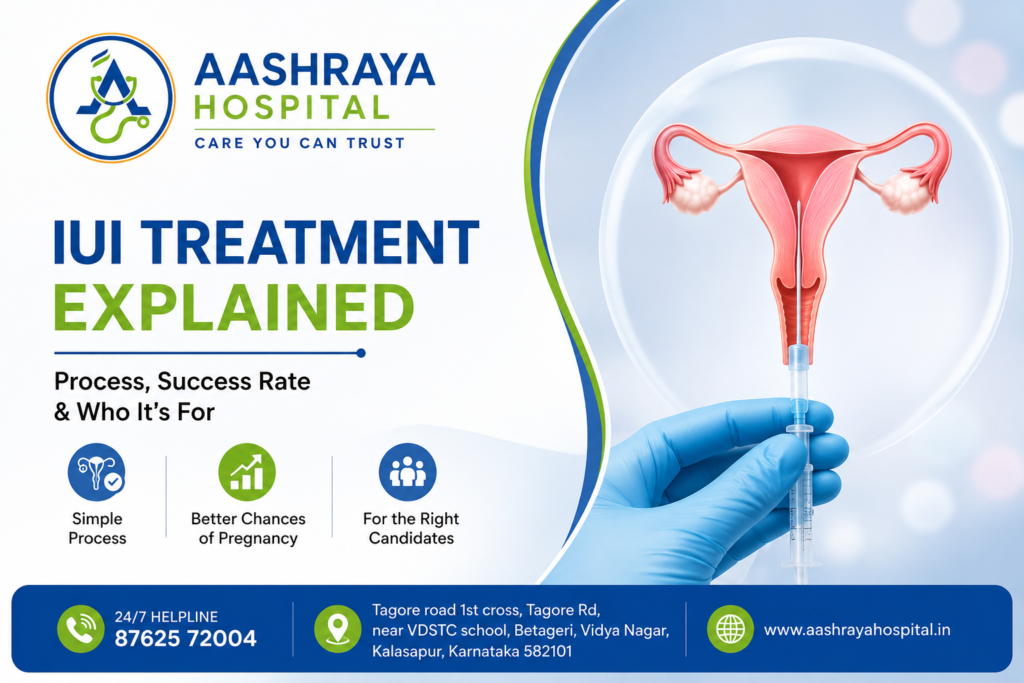
IUI treatment explained simply: if your doctor has recommended it and you’re not sure what it actually involves, you’re not alone — it’s one of the most common first steps couples take on the path to conception, and also one of the most misunderstood. This guide covers the process, success rate, and who it’s for, so you know exactly what to expect before you begin.
What Is IUI?
IUI stands for Intrauterine Insemination. It’s a fertility treatment where specially prepared, healthy sperm are placed directly into the uterus around the time of ovulation. This shortens the distance sperm need to travel and increases the chances of fertilization, making it a simpler, less invasive alternative to IVF for many couples.
Unlike IVF, IUI does not involve retrieving eggs or fertilizing them outside the body. Fertilization still happens naturally, inside the fallopian tube — IUI simply improves the odds by giving sperm a head start.
How Does the IUI Process Work?
Having the full IUI treatment process, success rate, and who it’s for laid out step by step makes the experience feel far less intimidating. Here’s what typically happens:
Step 1: Ovulation Tracking
Your cycle is monitored using ultrasounds and sometimes blood tests to pinpoint exactly when you’re ovulating. Some patients also take mild fertility medication to encourage the release of one or two mature eggs.
Step 2: Trigger Shot (If Needed)
Once a follicle reaches the right size, a trigger injection may be given to time ovulation precisely, usually 24–36 hours before the procedure.
Step 3: Sperm Collection and Washing
A sperm sample is collected — either fresh or from frozen storage — and undergoes a “washing” process in the lab. This removes seminal fluid and concentrates the healthiest, most active sperm.
Step 4: The Insemination
Using a thin, flexible catheter, the washed sperm is inserted directly into the uterus. The procedure takes only a few minutes and feels similar to a routine pap smear — no anesthesia is required.
Step 5: The Two-Week Wait
After insemination, you’ll wait about 10–14 days before a pregnancy test can give a reliable result. Some mild cramping or spotting afterward is normal.
IUI Treatment Explained: Success Rate by Age
Success rates vary significantly depending on age, the cause of infertility, and whether medication is used alongside the procedure. On average:
- Under 35: 10–20% success rate per cycle
- 35–40: 10–15% success rate per cycle
- Over 40: Below 10% success rate per cycle
Because per-cycle success is moderate, most fertility specialists recommend attempting 3–4 cycles of IUI before considering a move to IVF — this is a key part of having IUI treatment explained realistically rather than optimistically. Cumulative success across multiple cycles is meaningfully higher than any single attempt.
Factors That Improve IUI Success
- Using ovulation-stimulating medication alongside IUI
- Good sperm motility and count in the washed sample
- No significant blockage in the fallopian tubes
- Being under 35 years of age
IUI Treatment Explained: Who Is It Best For?
IUI is generally recommended as a first-line treatment for couples with mild fertility challenges rather than severe ones. You may be a good candidate if you have:
- Mild male-factor infertility — slightly low sperm count or motility
- Unexplained infertility — no clear cause found after testing
- Ovulation disorders — irregular or absent ovulation
- Cervical mucus issues — mucus that hinders sperm movement
- Single mothers by choice or same-sex couples using donor sperm
When IUI Is Usually Not Recommended
- Both fallopian tubes are blocked or severely damaged
- Severe male-factor infertility (very low sperm count or motility)
- Advanced maternal age with diminished ovarian reserve
- Moderate to severe endometriosis
In these cases, doctors typically recommend moving directly to IVF, since IUI success rates drop significantly.
What to Expect After the Procedure
Most people resume normal daily activities immediately after IUI. Mild cramping, light spotting, or slight bloating can occur but usually resolves within a day or two. Strenuous exercise is best avoided for 24 hours, but there’s no need for bed rest.
IUI vs IVF: A Quick Comparison
| Factor | IUI | IVF |
|---|---|---|
| Invasiveness | Low, no anesthesia | Moderate, includes egg retrieval |
| Cost | Lower per cycle | Higher per cycle |
| Success rate per cycle | 10–20% | 30–50% (age-dependent) |
| Best for | Mild fertility issues | Moderate to severe infertility |
Frequently Asked Questions
1. Is IUI treatment painful? Most patients describe it as mildly uncomfortable, similar to a pap smear, rather than painful. It takes only a few minutes and requires no anesthesia.
2. How many IUI cycles should I try before switching to IVF? Most specialists recommend 3–4 cycles of IUI before considering IVF, since cumulative success improves with repeated attempts.
3. Does age affect IUI success rates? Yes, significantly. Success rates are highest under age 35 and decline steadily after 35, with a more noticeable drop after 40.
4. Can IUI be done with donor sperm? Yes. IUI is commonly used with donor sperm for single mothers by choice, same-sex couples, or cases of severe male-factor infertility.
5. How soon can I take a pregnancy test after IUI? It’s best to wait 10–14 days after the procedure for an accurate result, since testing too early can give a false negative.
6. What medications are used with IUI? Common options include oral medications like Clomiphene or Letrozole, and sometimes injectable gonadotropins, to stimulate egg development.
7. Is bed rest needed after IUI? No. Most clinics recommend resuming normal light activity right away, though intense exercise is best avoided for 24 hours.
8. When is IVF recommended instead of IUI? IVF is usually recommended when tubes are blocked, sperm quality is very low, or IUI cycles have not resulted in pregnancy after 3–4 attempts.
Final Thoughts
Having IUI treatment explained: process, success rate, and who it’s for in one place helps you walk into your fertility journey with confidence instead of guesswork. It’s a low-risk, relatively simple first step for many couples, but it isn’t the right fit for everyone.book appoinment